
01.2026
FMC // February 2026. Our Upcoming Events
03.02 / The FASHION HERITAGE ACADEMY meets the students
Between February and March, the M-Cube Foundation will meet students in schools across Piedmont to present the brand-new FASHION HERITAGE ACADEMY and discuss the future professions in the world of fashion — spanning haute couture, cinema, and cosplay.
We’ll start with the art high schools Pinot Gallizio in Alba, Amleto Bertoni in Saluzzo, Norberto Rosa in Bussoleno, and Felice Faccio in Castellamonte, and soon we’ll be visiting Turin and Cuneo as well.
Fewer Managers, more Designers
by Fabrizio Modina
In a recent and rather unsettling statement, Luca de Meo — the new CEO of the Kering Group, a businessman pulled from the automotive sector to balance Gucci’s books — declared: “We need to put the customer back at the center, so we no longer depend solely on the vision of the creative director.”
To recap: a manager who, until just a few months ago, was dealing with bumpers and windshield wipers, after being hired with a €20 million signing bonus and an annual salary of about €5 million, is now telling us that the designer no longer matters, that creativity is a risk, and that the path forward lies in collections generated from sales data analysis.
This “strategy” will enforce a six-month development cycle — a ludicrous idea that will inevitably come at the expense of both concept and execution quality, delivering yet another fatal blow to the already lifeless Made in Italy. Gradually, the only remaining difference between Gucci and Zara will be the price tag.
So — has AI won? From now on, will it be artificial intelligence that dresses us, cutting down design department costs so managers can further multiply their salaries?
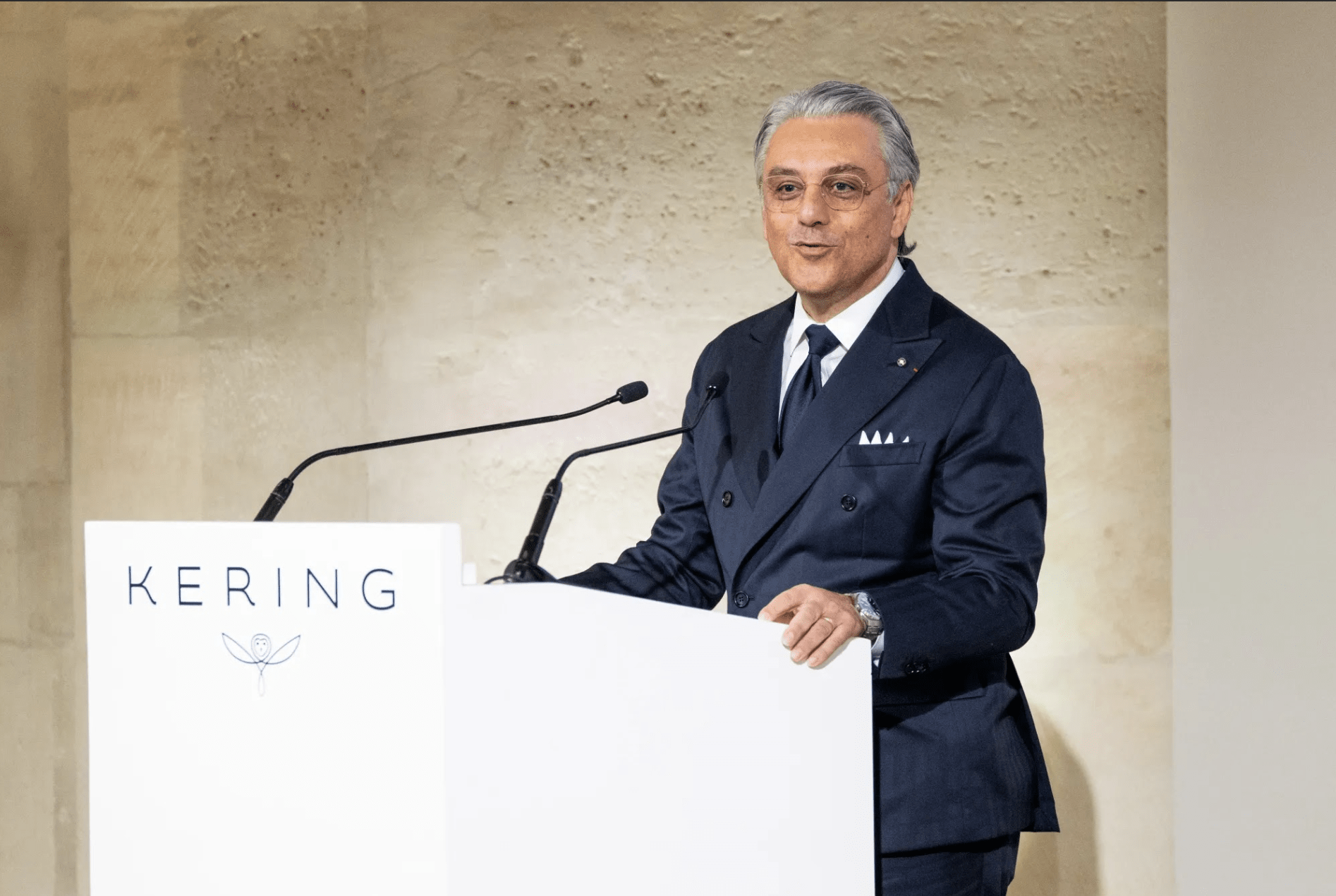
De Meo attributes only 20% of a brand’s essence to the vision of its designers. Perhaps it’s just as well that Armani and Versace are no longer with us — unlike us, they’ve been spared this torment.
The great crisis that fashion is currently facing may well be a karmic consequence of the bulimic greed of the major brands which, over the past fifteen years, have continuously inflated their prices — dictated by the white collars in the upper offices — without bothering to nurture the skills of a new generation of designers. These young professionals are now technically unprepared and incapable not only of proposing but even of imposing new energy into this dying industry — thus giving, in a way, some credence to the aforementioned CEO.
When even the European Commission has to step in to fine Gucci, Chloé, and Loewe (owned respectively by the Kering, Richemont, and LVMH groups) for violating EU competition rules, after confirming the price-fixing practices imposed on their retailers, it becomes painfully clear that something fundamental is no longer working.
Yohji Yamamoto, a man who truly invented fashion, certainly doesn’t mince words. At the end of the latest Paris Fashion Week, he declared:
“Fashion has become a joke. It’s only about money. The main companies in the industry are like children playing soccer, all running after the same ball. They don’t think about their customers. I just think they have too much money, so they don’t need to work hard. They’re always floating on money.”
Yamamoto is one of those former young revolutionaries who, in the early 1980s, transformed fashion by taking every possible risk. Independent men and women who experimented, failed, triumphed, and built companies that grew strong — without collapsing under the desire to conquer the world economically.
That independent system has been completely devoured: today, the luxury boutiques in prime locations around the globe all belong to just four holding groups that allow no “infiltration.” As if that weren’t enough, they also control 90% of the media. In such an apocalyptic scenario, no young designer, no matter how talented, can hope to emerge.

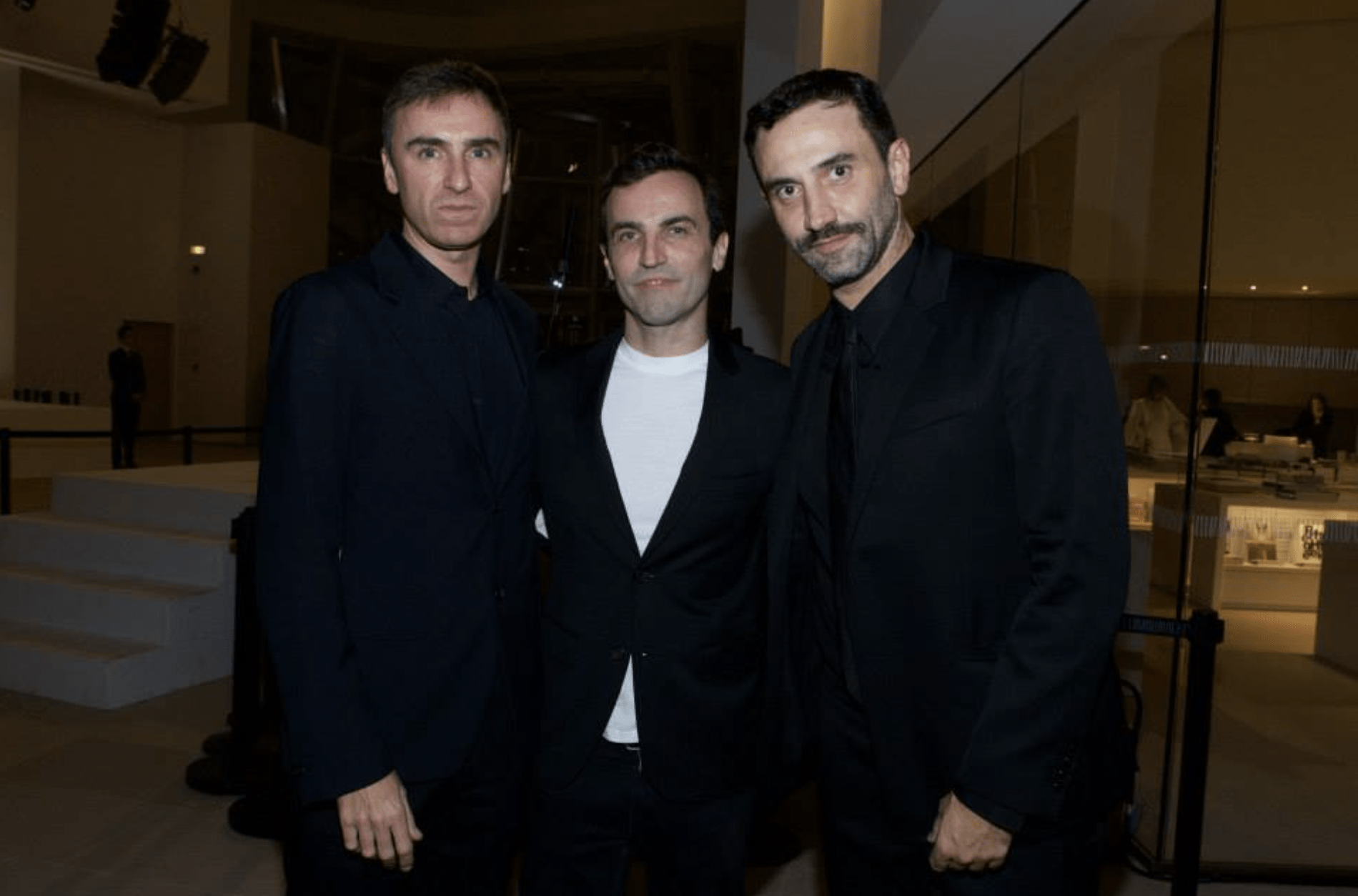
With a touch of optimism (and perhaps a bit of hypocrisy, given his habit of jumping from one brand to another), Raf Simons said:
“What would really shake up fashion—not in terms of one individual designing collections? If every creative director in the world walked away from their position and said they no longer wanted to do anything for these brands. We should all become independent, all at the same time. That’s my happy, romantic thought.”
Alessandro Sartori, artistic director of Zegna, lifts the lid on Pandora’s box:
“This is a very interesting moment for designers. But I’ll ask one question: does that designer feel right for that brand, or is he simply bringing himself wherever he goes?”
In other words: if Raf Simons, Alessandro Michele, Nicolas Ghesquière, Riccardo Tisci, and many others were given the chance to design collections under their own names — and not those of people who have been dead for a hundred years — wouldn’t fashion regain its identity and freshness?
Stefano Gabbana captures the mood perfectly, with a note of melancholy, writing on Instagram:
“Once, we were free to express ourselves with volumes, proportions, and ideas. We didn’t even really know what we were doing, but that freedom allowed us to experiment without limits.”
In a piece that collects the words of figures far more distinguished than myself, I can’t close without quoting Alessandro Calascibetta, Editor-in-Chief of Style Magazine, who — as a rare voice against the current (since fashion media today is almost entirely subservient to the holding companies) — writes courageously:
“Designers are really trying; the future of fashion should be in their hands rather than in those of the CEOs, who in the long run have lost sight of what fashion truly means.” Amen.
Fashion, a profession in evolution
Discover the video talk by the M-Cube Foundation — starting from the world of fashion, then gliding into many other realms of Modern Mythology!
Doppia Zip
curated by Grita
filming and editing by Simona Rapisarda
Photography, Fashion and Communication
Valentina Rinaudo, photographer and communication designer, talks to us about the evolution of communication, the role of photography, and how it has radically changed over the past few decades.
Discover the FASHION HERITAGE ACADEMY
300 hours of professional training!


Contact & Info
educational@fondazionemcube.it
Secretariat +39 392.6328942 // from Mon to Fri – 14.00-16.00
Fashion on the big screen:Valentino, The Last Emperor (2008)
curated by Elena Maria Casella
curated by Elena Maria Casella
With Valentino: The Last Emperor (2008), cinema fully enters the world of Valentino Garavani at the most delicate and symbolic moment of his career — his farewell. Today, in light of his passing, that gesture carries an even more definitive weight.
Directed by journalist Matt Tyrnauer, the documentary is not only the portrait of a legendary couturier, but also the chronicle of the end of haute couture as a craft and an authorial practice — one built on savoir-faire and on the centrality of the creator, before the entire system was absorbed by global financial logic.
Filmed between 2005 and 2007 and built from over 250 hours of footage, The Last Emperor follows Valentino closely, accompanying him through the final two years of leading his maison. The camera moves seamlessly between ateliers, fittings, runway shows, and private moments, offering a privileged glimpse into a world traditionally closed off. At the heart of this story, the relationship with Giancarlo Giammetti, Valentino’s life partner and artistic collaborator, emerges most strongly — a central figure in the invisible architecture of his empire.
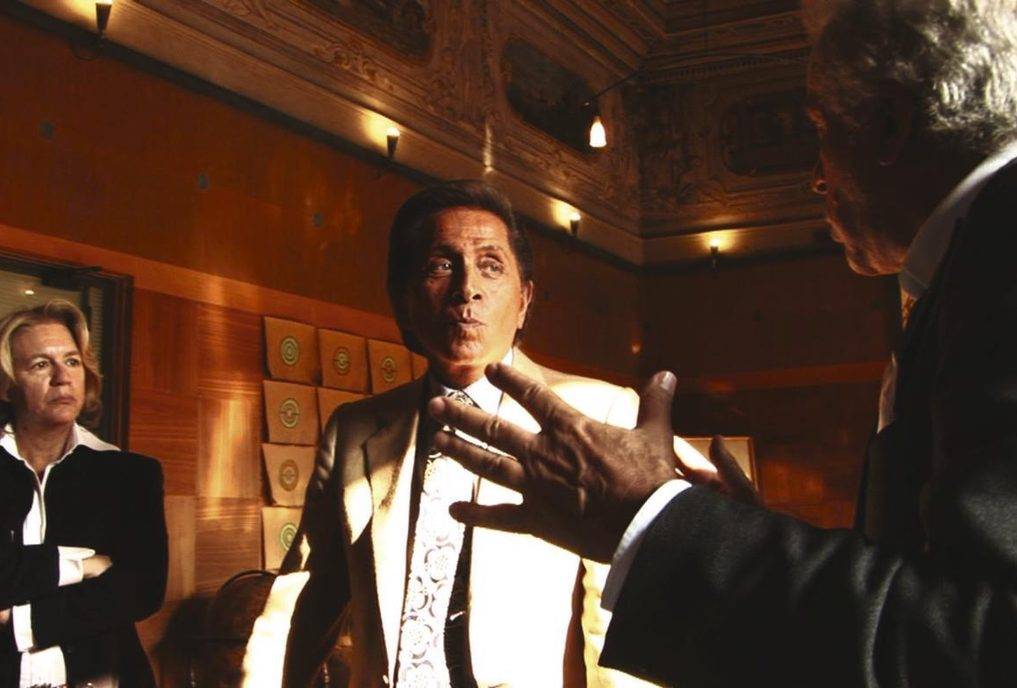
The film documents the “final act” of the designer’s career, moving between Paris runway shows and exclusive events that serve as narrative opportunities to reveal not only his creative work, but also the vulnerabilities and confessions of a man who made fashion his existential mission.
Valentino never appears as a distant icon; rather, he is portrayed as an artist deeply connected to his creative act, unable to separate life from work.
Alongside him, the film constructs a rich, ensemble portrait of the fashion system and the international star world. Figures such as Tom Ford, Karl Lagerfeld, Giorgio Armani, Donatella Versace, Anna Wintour, Meryl Streep, and many others appear — interviewed or on camera — serving as witnesses to an era in which Valentino was a cultural as well as stylistic reference point.
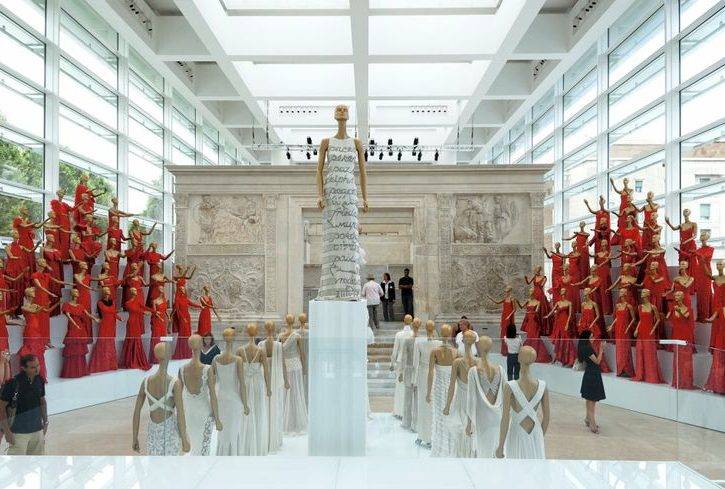
The narrative heart of the documentary is the staging of the commemorative runway show, alongside the grand tribute exhibition at the Museo dell’Ara Pacis, celebrating Valentino’s 45-year career. The show is not merely an homage to the past; it is an artistic testament and an act of awareness, as Valentino knows he is closing an irreplaceable chapter, and he does so in a manner nothing short of sacred. Following the show comes the most painful and inevitable moment: the handover of the maison.
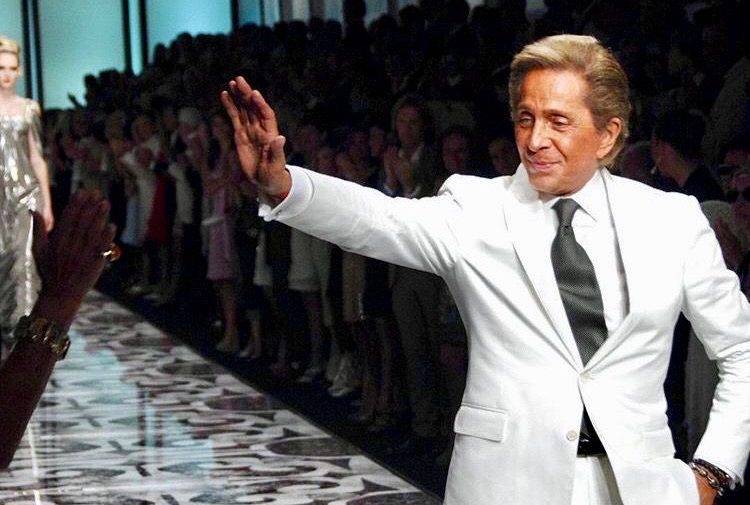
Valentino’s career tells the story of an Italy capable of asserting itself on the world stage through elegance, craftsmanship, and a unique creative vision. Watching Valentino: The Last Emperor today means confronting the farewell not only to a designer, but to the very idea of fashion as a total, personal, and irreplaceable act.
In a system that moves ever faster, fragmenting visions and diluting creative responsibility, Valentino remains a luminous anomaly: a man who built an empire without ever giving up his own idea of beauty. As he liked to say himself:
“I love beauty. It’s not my fault.”
MiniMyths – in collaboration with Scuola Internazionale Comics

Olympians
Sport: a key to overcoming our barriers…
first and foremost, mental and cultural!
by Maddalena Scarcella

FMC // January 2026. Results and ongoing projects
ONGOING PROJECTS
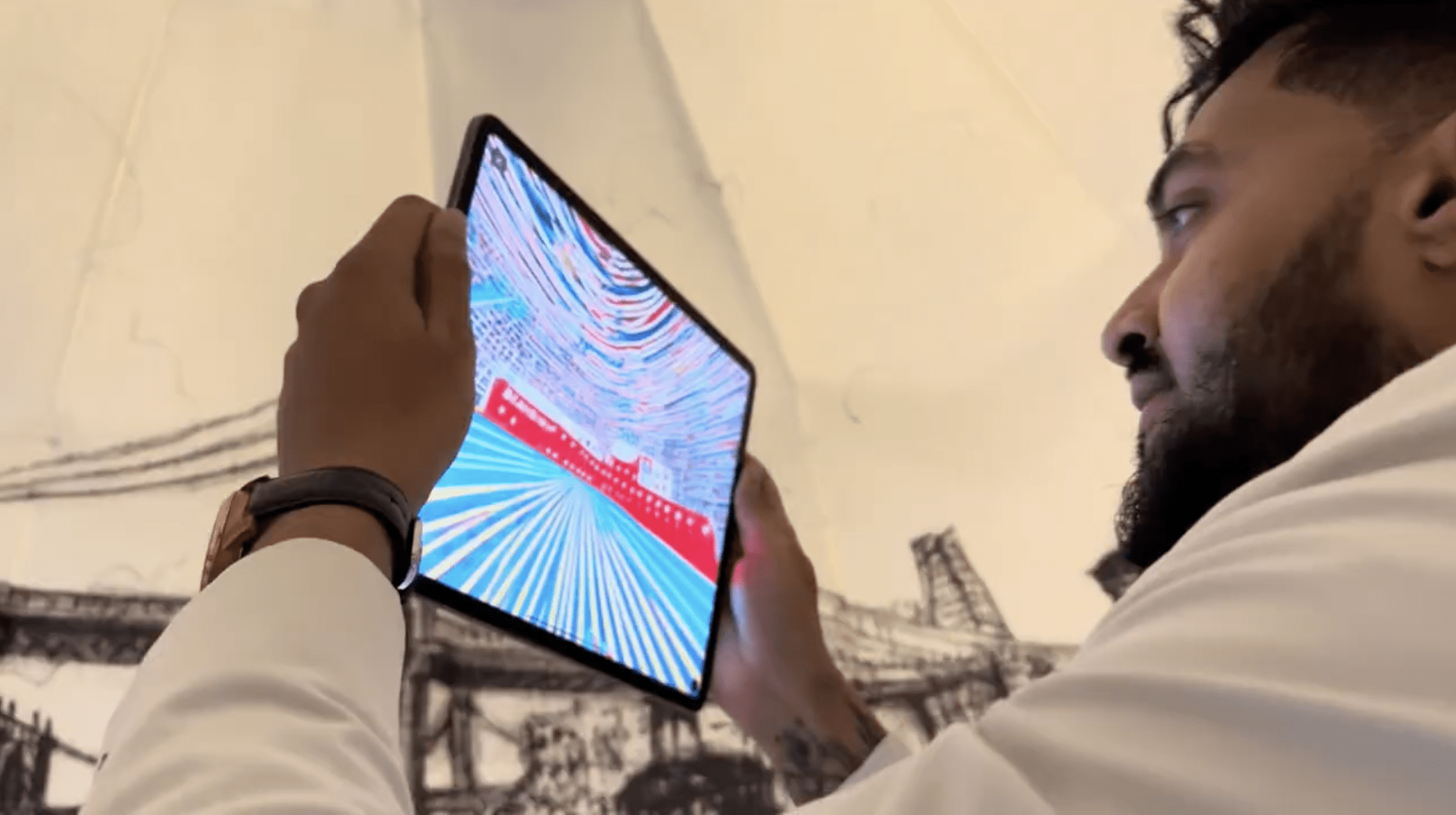
We’ve been in New Zealand! At Auckland University, together with panoramic artist Chiara Masiero Sgrinzatto, we set up the exhibition See the Invisible, ran our workshop Draw the Invisible, and presented our scientific research at the GDI 2025 conference. Next stop… Japan!
NEW FORMATS FOR YOU
A very short update, just for you…
- The irreverent magazine LETTERALMENTE (curated by Grita).
- …And to celebrate together and discover more about the Japan we love, the first episode of poddokyasuto – ポッドキャスト is out. The podcast explores how society, culture, politics, and the economy are shaped by — and shape — the major themes of our time. Whatever the theme, at least one manga has something to say about it!
RESEARCH & INNOVATION
At the beginning of 2026, we are working with our partners — PHASMATIC (Greece) and Inventivio (Germany) — on the next steps in 3D digitalization of objects and the creation of storytelling for museums and gaming, including collaboration with blind and visually impaired communities.
With musician Federico Coderon, we are exploring immersive audio environments for upcoming 4D initiatives in Berlin, Milan, and Turin.
Meanwhile, with documentary photographer Laura Liverani, we are opening a new Asian front. Between tattoos and objects, what does Modern Mythology mean for the descendants of the Ainu (Japan) and Māori (New Zealand) minorities?
EU & EXTRA EU PROJECTS
By December 2025, we completed the projects:
- Invisible Cities (HORIZON / NGI Enriches)
- GLEAM – Game to Learn and Enable Accessibility through Modern Mythology (HORIZON / XR4ED)
…and crossed our fingers for the new proposals submitted:
- REBORN – Regenerative Ecologies for Building Organisms and Resilient Neighbourhoods
- SEEDs & ROOTs
- Art4Dvanced
To date, the M-Cube Foundation collaborates on its projects with over 100 partners across Europe, the USA, and New Zealand.