
11.2025

FMC // December 2025. Our upcoming events
30-04.12 / See the Invisible
FMC inaugurates the new exhibition DEMO See the Invisible in Auckland (New Zealand). The scientific and technological research conducted in Portugal and the USA, in collaboration with artist Chiara Masiero Sgrinzatto, takes shape in the exhibition space of the Auckland University of Technology.
See the Invisible will present five interactive installations, inviting the public to explore two mythical cities — Venice and New York. These cities, capable of generating an image of themselves that goes beyond their (albeit unique) skylines, evolve in real time, acting as perpetual sources and receivers of new narratives.
30.12 / Draw the Invisible
The workshop Draw the Invisible opens a co-design space with the students of the Auckland University of Technology. Artist Chiara Masiero Sgrinzatto and curator Emanuela Zilio will guide participants in discovering the spherical representation of places. The workshop will be an engaging moment of exchange and dialogue on themes such as Modern Mythology, urban identity, and social regeneration.
01-03.12 / GDI 2025 Green + Digital + Intelligent Built Environments
We’re ready to present our paper “See the Invisible. How generative AI can support panorama artists in representing spaces more deeply while gaining greater understanding of ‘Eternal Cities’” to the world!
08-10.12 / STATUS QUⒺST in Bruxelles for UnitedXR!
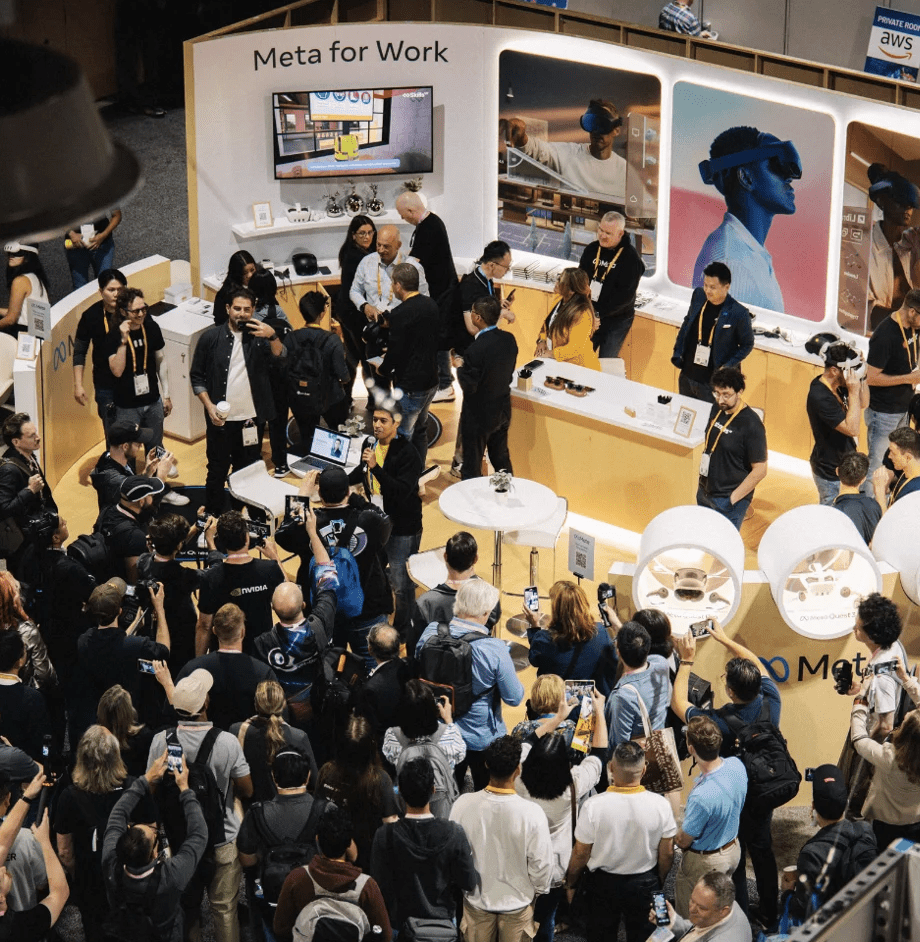
FMC, in collaboration with NEEEU GmbH, is proud to present its game STATUS QUⒺST at UnitedXR in Brussels. Featuring a playable prototype that bridges two eras — ancient Greece and the year 2199, in homage to The Matrix — the project marks the beginning of a collaboration with blind and visually impaired communities, following a co-design and accessibility-for-all approach.

19-21.12/ Learning through play at the WORLDCTE Conference
Playing means learning — children know this perfectly well, though adults sometimes forget it.
At the WORLDCTE Conference in Berlin, FMC presents its research in the field of collaborative edutainment, with the paper “Playing Blind, Playing with Blinds: A Peer-to-Peer Learning Game.”
Who Decided That Fashion Has to Be a Luxury?
by Fabrizio Modina
In the current “narrative” of brands — a term now as overused as heritage — there exists only one image, a one-way direction, that portrays fashion of the past (and therefore of the present) as a “closed” system, intended for a noble or upper-bourgeois clientele with unlimited spending power. The message is: “either you’re rich, or you’re out.”
And this, in fact, is the image of fashion that has been deeply ingrained by the big names over the past fifteen years. So much so that, lately, newspaper headlines no longer speak of a “fashion crisis” but of a “luxury crisis,” as if the two were meant to signify the same thing. But that is not the case at all.
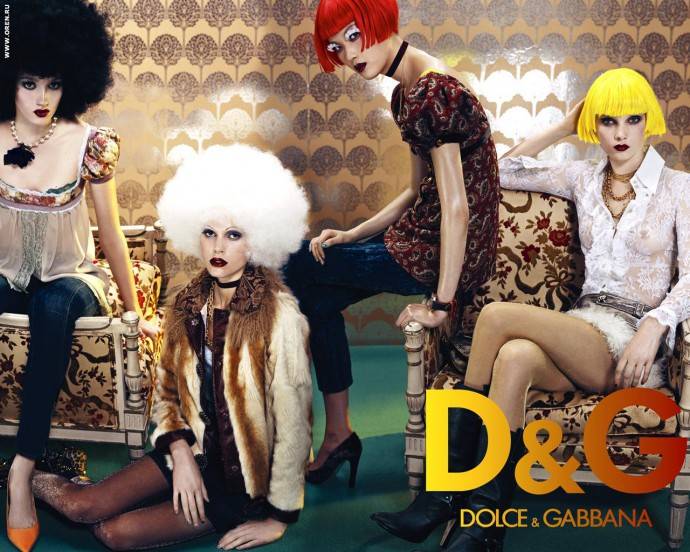
Photo: Dolce & Gabbana
Modern Haute Couture was born as the legitimate heir to that tradition of the highest-level tailoring which dressed queens, empresses, countesses, and entrepreneurs — an artistic expression of that “savoir-faire” capable of creating dreamlike garments: indeed, extremely expensive, yet the result of countless hours of construction and embroidery, made from precious and refined fabrics, conceived by master pattern-makers who knew every millimeter of their clients’ bodies and had no other mission than to make them more beautiful and admired.
However, this is where the “narrative” told today by Dior, Balenciaga, Chanel, and the other pillars of the fashion myth conveniently ends — leaving out a crucial detail: the business of these maisons was not based solely on the sale of made-to-measure garments, but also on that of the pattern itself.
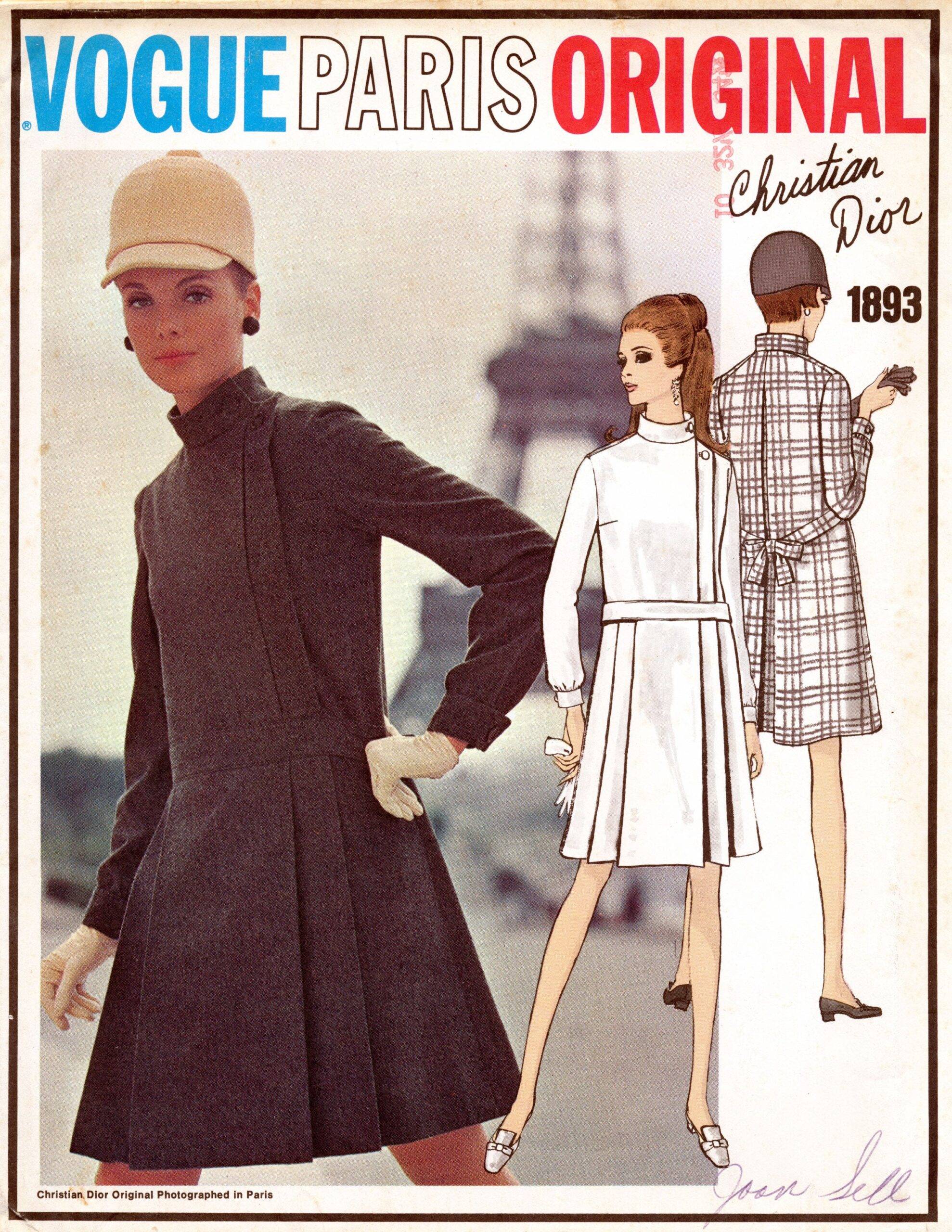
Photo: VOGUE
Thus, the geniuses who invented the New Look, the trapeze dress, the A-line silhouette, the balloon skirt, and so on, also (rightly, and for a fee) distributed the patterns of their most original creations — making their work more democratic. This allowed even a small-town seamstress to offer her clients a dress in line with the latest Parisian trends. Certainly, more modest fabrics were used, and the craftsmanship was less refined, but the shapes and styles faithfully echoed those seen in the glossiest magazines. Fashion was a dream that could be scaled according to one’s income.
When Yves Saint Laurent opened the first prêt-à-porter boutique in 1966, the elite cried scandal — because now even “ordinary people” could afford a piece by the divine couturier. Saint Laurent understood that the world was changing and was the first to ride the wave of a rapidly expanding market.
This lesson in “fashion democracy” yielded brilliant results between the late 1980s and early 2000s, when many of the brands of fashion’s new wave diversified their output by introducing so-called “second lines” alongside their main collections — the latter being of higher creative and qualitative standards. These secondary lines, designed for smaller budgets, brought brand identity within the reach of a younger audience, combining design and innovation with accessible prices and wide distribution.
Those were the years of Versus (Gianni Versace), Emporio Armani, D&G, Junior Gaultier, and many other “twin” labels: Paris and Milan dressed everyone — with great economic success — and fast fashion not only did not yet exist, but, above all, no one felt the need for it.
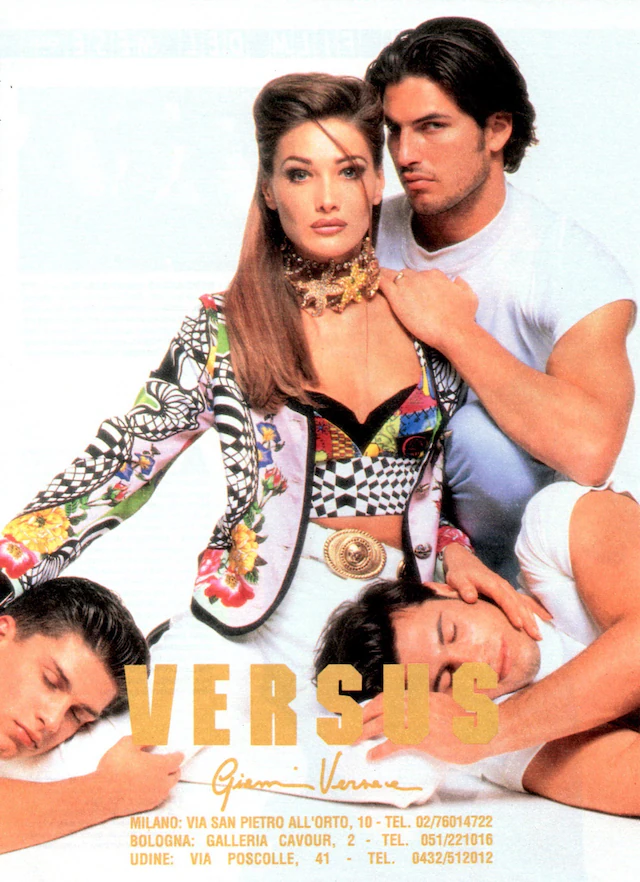
Photo: VERSUS
Nothing remains of that world and that era. With fashion divided into two macro-blocks, each waging a battle by continually raising prices at the expense of design and quality, we have arrived at today — suspended in the cosmic void of a market that tells us the same T-shirt can cost €400 or €4, with the only differentiator being the label.
The Shein phenomenon (among others) is not a meteor that happened to fall by chance, but the shockwave of a need that is not only economic but also cultural: the necessity of accessibility, low-cost copies that are often qualitatively comparable to high-cost originals. The major maisons, on the other hand, chose exclusion over inclusion — eventually even losing their most loyal and wealthy clients.
The damage inflicted on the system by the two macro-blocks, with exponential price increases, has led to fashion being perceived today as something for the few — an exclusive ritual rather than a shareable art. The bubble inflated to unbelievable proportions, primarily sustained by the Asian market, which was exploited for its purchasing power — until, puff! — even this bubble burst, aided by the growing awareness among consumers of the product and the fair value it should carry.
Fortunately, many industry analysts see investment in creativity and price containment as the true drivers for the recovery of fashion, which now, more than ever, must rebuild its identity — balancing between the unjustifiable economic values of the big players and the unethical drift of fast fashion. A nod to Andrea Guerra, CEO of Prada, who candidly admitted: “Perhaps we raised prices too much.”
Fashion, profession in evoluzion
Discover the video talks by Fondazione M-Cube, starting with fashion and then gliding into many other worlds of Modern Mythology!
Double Zip
curated by Grita
filming and editing by Simona Rapisarda
Cerulean
«So, in reality, that sweater represents millions of dollars and countless jobs. And you’re beyond comic in believing that you’ve made a choice that exempts you from the fashion industry, when in fact you’re wearing a sweater that was chosen for you by the people in this room… from a pile of clothes.»
Today on Double Zip: Grita and Fabrizio Modina, expert in Modern Mythology.
Discover the FASHION HERITAGE ACADEMY
300 hours of specialization for professionals


Contact & Info
educational@fondazionemcube.it
Segretariat +39 392.6328942 // from Mon to Fri – 14.00-16.00
Fashion Through the Big Screen: Frankenstein (2025) – curated by Elena Maria Casella
Guillermo del Toro has been chasing Frankenstein for more than ten years. He has read it, studied it, imagined it. This year, that long-pursued vision has finally taken shape: an adaptation that restores the myth in its most intimate, sorrowful, and profoundly human dimension.
Del Toro — poet of shadows, archaeologist of the marvelous, craftsman of impossible bodies — has reanimated Frankenstein without betraying its emotional core. He does not take the path of triumphant horror nor gothic spectacle: instead, he brings the story back to its philosophical roots, where the monster is nothing less than a reflection of human violence that precedes every act of terror.
The Creature born from the hands of Dr. Victor Frankenstein is neither a villain nor the embodiment of evil: it is a child who never asked to be born, thrown into a world as wonderful as it is hostile, abandoned by those who should have guided it. The director, who has always built his cinema around the aesthetics of the “different,” presents us with a being that is truly what Mary Shelley imagined: a body assembled and stitched together, a soul without malice, forced to learn far too quickly what it means to live in a universe obsessed with aesthetic perfection and largely indifferent to inner essence.
One of the key elements of the new Frankenstein is Kate Hawley’s costume design, created in direct relation to the bodies and performances of Jacob Elordi (the Creature) and Mia Goth (Elizabeth). Del Toro avoids “neutral” actors and rejects classic Victorian clichés: the 19th century he chooses to depict is romantic, suspended between myth, religious iconography, and a melancholic nature, where color plays a central role — as seen in the scarlet red rosary worn by Elizabeth throughout the film, created in collaboration with Tiffany & Co.
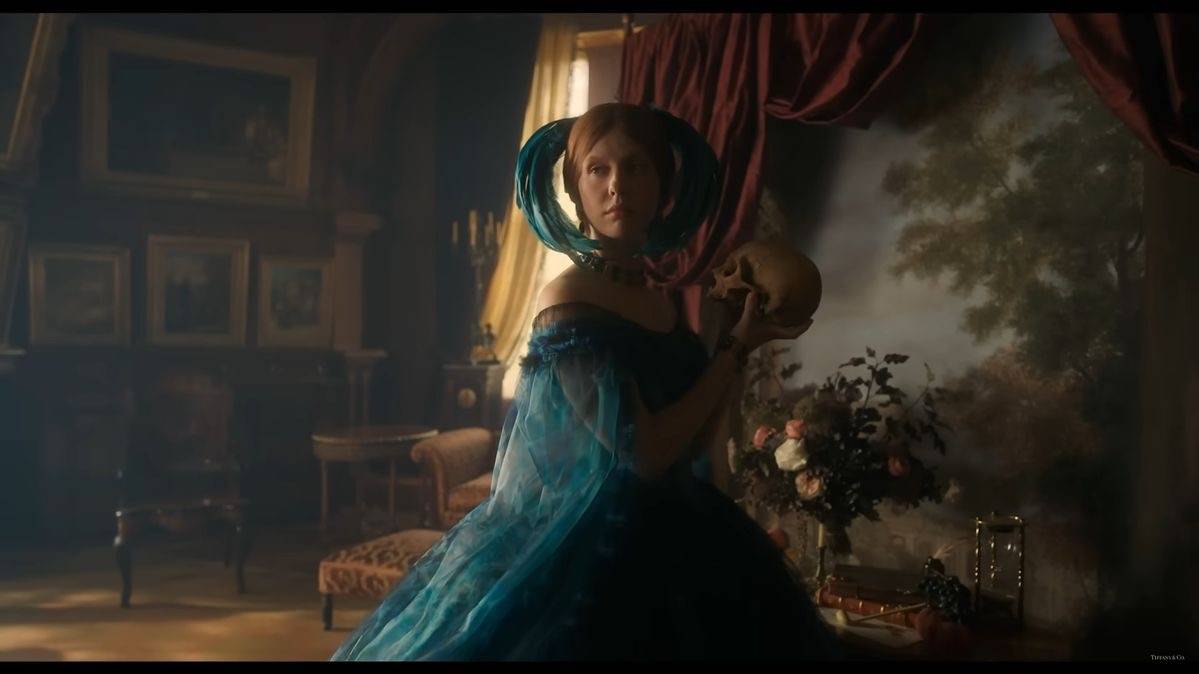
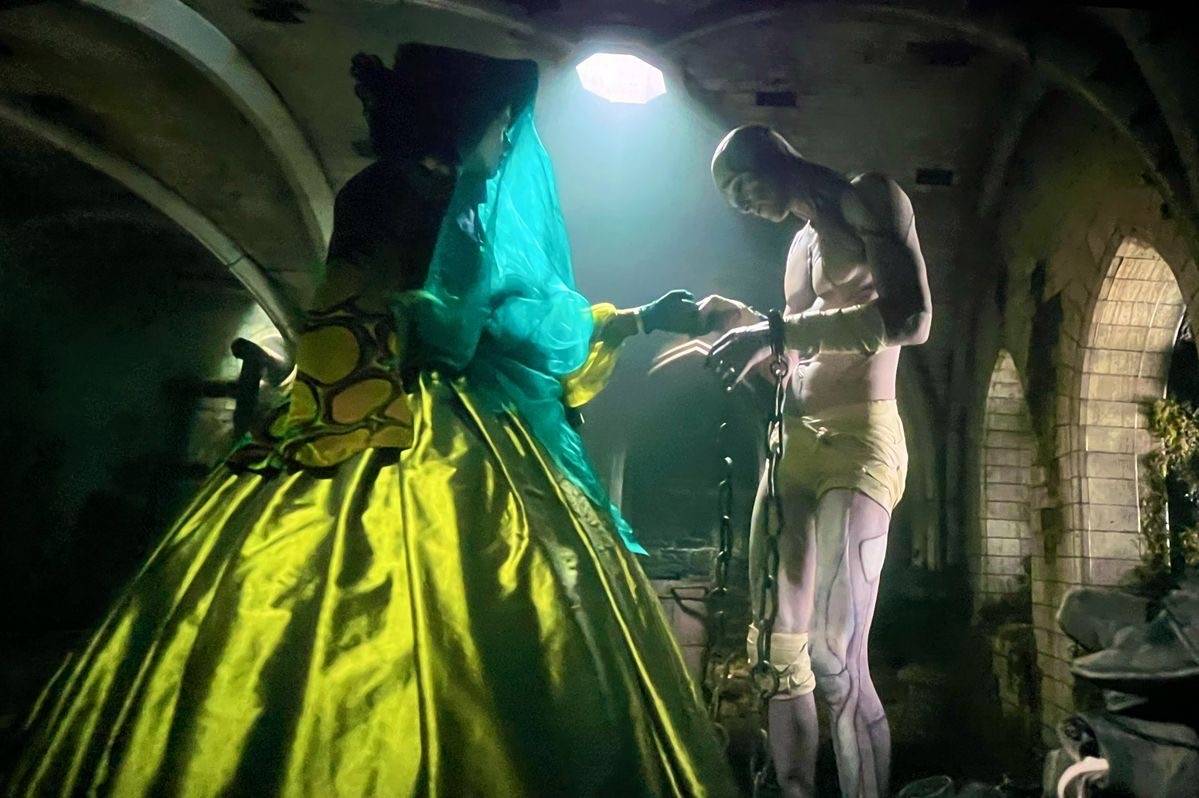
Elizabeth’s costumes, often iridescent like insect carapaces, help define her as an almost magical figure — an ethereal, pure twilight nymph, in stark contrast with the world she inhabits. They are essential in conveying her deep bond with the Creature, visible in the intimate gesture where he lifts the veil covering her, and even more so in the wedding dress, whose seams mirror those on his body, laden with emotional significance.
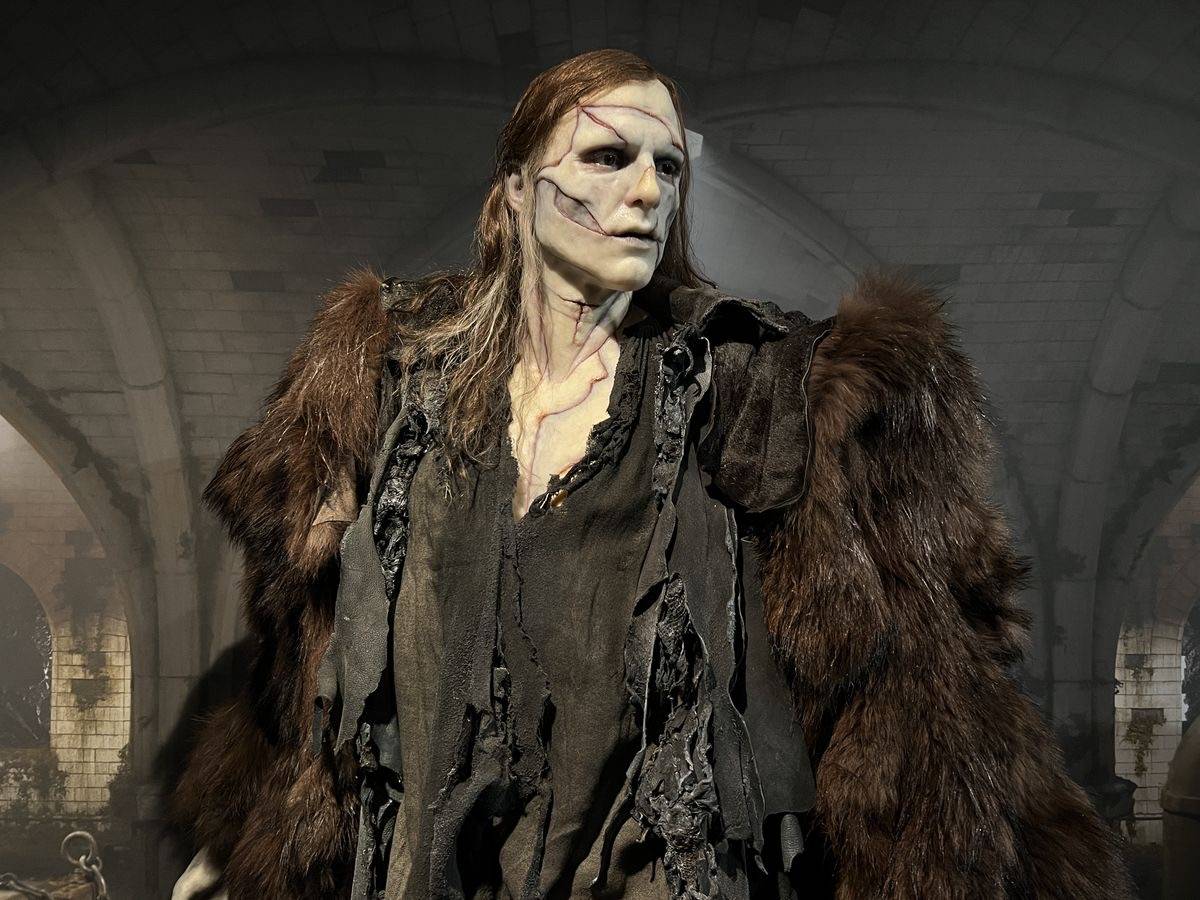
Jacob Elordi, with his tall, lean physique, gives the Creature a new dimension — more vulnerable than frightening. Central to this transformation is the make-up and prosthetics work by designer Mike Hill, who creates artificial skin marked by scars, stitches, and imperfections — tangible traces of the body’s assembly. The use of contact lenses, bandages, and wigs completes the metamorphosis, giving the Creature an aesthetic suspended between the sacred and the profane.
Del Toro engages with the literary source in a direct and respectful manner: Mary Shelley, the author who in 1818 gave life to the first great modern mythology of the artificial body. Shelley imagined a world in which man, seduced by the power of science, challenges the limits of nature without taking responsibility for his actions. Del Toro captures this tension precisely.
It is not the Creature that embodies horror, but Victor Frankenstein — a brilliant surgeon incapable of grasping the moral weight of his deeds. The Creature reclaims the role Shelley envisioned: a figure that forces us to ask what remains of us when the world does not see us for who we are, but only for how we appear.
MiniMyths – in collaboration with Scuola Internazionale Comics

in collaboration with Scuola Internazionale Comics (Torino)
After an extraordinary year together with the students and teachers
of the International School of Comics… the new column MiniMyths arrives
to explore together what Modern Mythology really is.
Seeing the Past, Understanding the Present,
Predicting the Future. Reading Time
by Federica Fornelli

FMC // October 2025. Results & ongoing projects
NEW FORMATS FOR YOU
In development for you… the irreverent magazine “LETTERALMENTE” (curated by Annarita Clemente). And there’s more… a magazine directly from the cosplay world with Angela De Marco, and a film review series with Nicolas Casari.
RESEARCH & INNOVATION
The research of the M-Cube Foundation continues in collaboration with the New York Institute of Technology (USA), Auckland University of Technology (NZ), HTW-Berlin (DE), and Universidade Aberta (Lisboa, Algarve – PT).
We are studying how Modern Mythology pervades and impacts spaces — the “Myth Cities.” At KUI 2025, held at the Kulturforum in Berlin, we presented the first chapter of this work.
EU PROJECTS
In the application phase, in collaboration with 40 partners across Europe, the USA, and New Zealand, there are three new projects in response to the latest Horizon calls.